
A brighter smile is a common goal, but with so many whitening products available, it can be difficult to know which option is right for you. From whitening toothpastes and strips to professional treatments, each promises noticeable results, yet the outcome often depends on the cause of your tooth discoloration and the overall health of your teeth.
Professional teeth whitening can be an excellent option for many patients, but it isn’t the right solution for every type of stain. Understanding what causes teeth to become discolored and what whitening can realistically achieve can help you make a more informed decision before beginning treatment.
What Causes Teeth to Become Stained?
Tooth discoloration develops for many different reasons. Some stains affect only the outer surface of the enamel, while others occur deeper within the tooth, making them more difficult to treat with whitening alone.
Common causes include coffee, tea, red wine, tobacco use, dark-colored foods, natural aging, certain medications, and previous dental injuries. These are often grouped into extrinsic stains, which develop on the tooth’s surface, and intrinsic stains, which occur beneath the enamel.
Because different types of discoloration respond differently to whitening, identifying the cause is one of the most important steps before deciding on cosmetic treatment.
When Is Professional Teeth Whitening Worth Considering?
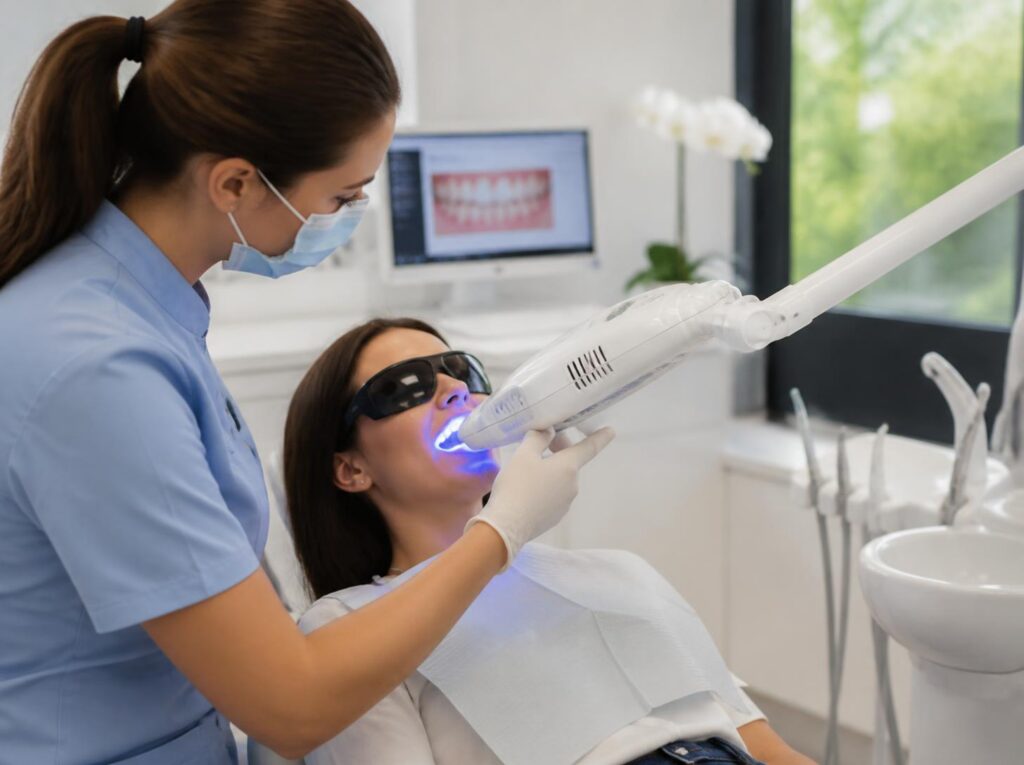
Professional teeth whitening may be worth considering if your teeth and gums are healthy and you’re looking to improve discoloration caused by everyday staining. Many patients choose whitening before weddings, graduations, vacations, or other special occasions, while others simply want to refresh the appearance of their smile.
Rather than relying on appearance alone, your dentist considers your overall oral health before recommending cosmetic treatment. Professional whitening may be appropriate if you:
- Have healthy teeth and gums.
- Want to reduce common surface stains.
- Are looking for more noticeable results than over-the-counter products have provided.
- Have realistic expectations about whitening treatment.
Every smile is different, which is why recommendations should always be based on an individual evaluation rather than a one-size-fits-all approach.
Why a Dental Evaluation Comes First
Before recommending professional teeth whitening, your dentist first evaluates your oral health to determine whether whitening is the most appropriate treatment.
During your appointment, your dentist may:
- Identify the cause of tooth discoloration.
- Check for cavities or gum disease that should be treated first.
- Evaluate existing crowns, fillings, or other restorations.
- Discuss your cosmetic goals and expectations.
- Recommend the treatment option that best fits your individual needs.
This evaluation is important because whitening is only one part of cosmetic dentistry. If another condition is affecting the appearance of your teeth, addressing that concern first may lead to better long-term results.
Are Over-the-Counter Whitening Products Always the Best Choice?
Over-the-counter whitening products can improve some surface stains, but they aren’t designed for every type of discoloration or every patient’s needs.
Because these products are made for general use, they don’t account for factors such as existing dental work, intrinsic stains, or underlying oral health concerns. Professional whitening begins with a dental assessment that helps determine whether whitening is appropriate before treatment begins.
In addition to providing individualized recommendations, professional whitening gives patients the opportunity to ask questions, understand realistic expectations, and learn about the options available for improving the appearance of their teeth.
When Teeth Whitening May Not Be the Right Option
Professional whitening is effective for many types of discoloration, but it isn’t the best solution for every situation.
For example, whitening treatments don’t change the color of existing crowns, veneers, fillings, or bridges. If these restorations are visible when you smile, whitening your natural teeth alone may create uneven color.
Some types of intrinsic discoloration caused by medications, injury, or tooth development may also respond differently to whitening than common surface stains. In these situations, your dentist may recommend other cosmetic or restorative treatments that better address your concerns.
Understanding the reason for your tooth discoloration helps ensure you receive recommendations that support both the appearance and long-term health of your smile.
Maintaining Your Whitening Results
Professional whitening can brighten your teeth, but maintaining those results depends on your daily habits and ongoing oral care.
Simple steps that may help your teeth stay brighter include:
- Brushing and flossing consistently.
- Scheduling routine dental exams and professional cleanings.
- Limiting foods and beverages that commonly stain teeth.
- Avoiding tobacco products.
- Following your dentist’s recommendations for maintaining your results.
Healthy oral habits not only help preserve the appearance of your teeth but also support your overall oral health.
Making the Best Choice for Your Smile
Choosing professional teeth whitening is about more than achieving a brighter smile. It’s about understanding the cause of discoloration, evaluating your oral health, and selecting a treatment that’s appropriate for your individual needs.
At Southtown Family Dental, we believe every patient deserves honest guidance and personalized care. Before recommending cosmetic treatment, we take the time to evaluate your oral health, discuss your goals, and explain your options so you can make informed decisions with confidence.
If you’re considering professional teeth whitening or would like to learn which cosmetic treatment may be right for you, schedule an appointment with our team. We’re here to help you achieve a healthy, confident smile through personalized care and trusted guidance.

