
Most people have heard “twice a year” their entire lives. And for many patients, that answer is correct. But it’s not the whole answer – because how often you should get a dental cleaning depends less on a universal rule and more on factors specific to your mouth, your health history, and what we find when we examine you.
At Southtown Family Dental in South Kansas City, we don’t assign cleaning schedules based on convention. We base them on clinical evidence and what is actually happening with your teeth and gums.
The Standard Recommendation and Why It’s a Starting Point, Not a Rule
The twice-yearly cleaning schedule has been the prevailing guidance in American dentistry for decades. The American Dental Association emphasizes that cleaning frequency should be individualized based on each patient’s oral health status and personal risk factors – not applied uniformly to everyone.
For many patients – those with healthy gums, minimal tartar buildup, a low history of cavities, and no underlying health conditions that affect the mouth – two professional cleanings per year is genuinely sufficient. It gives our team enough time to remove what a toothbrush misses, identify any developing concerns, and confirm that your home care routine is doing its job between visits.
The issue is that a meaningful portion of patients don’t fit this low-risk profile, and many of them don’t know it. According to the National Institute of Dental and Craniofacial Research, 42.2% of adults aged 30 and older in the United States have some form of periodontitis. That is nearly half of all adults in this age group – and gum disease at this stage is already advanced enough to require closer monitoring than a standard biannual schedule provides.
This is why the recommendation we give our patients in the Waldo/Brookside area isn’t “come back in six months” by default. It’s a conclusion we reach after looking at the evidence in front of us.
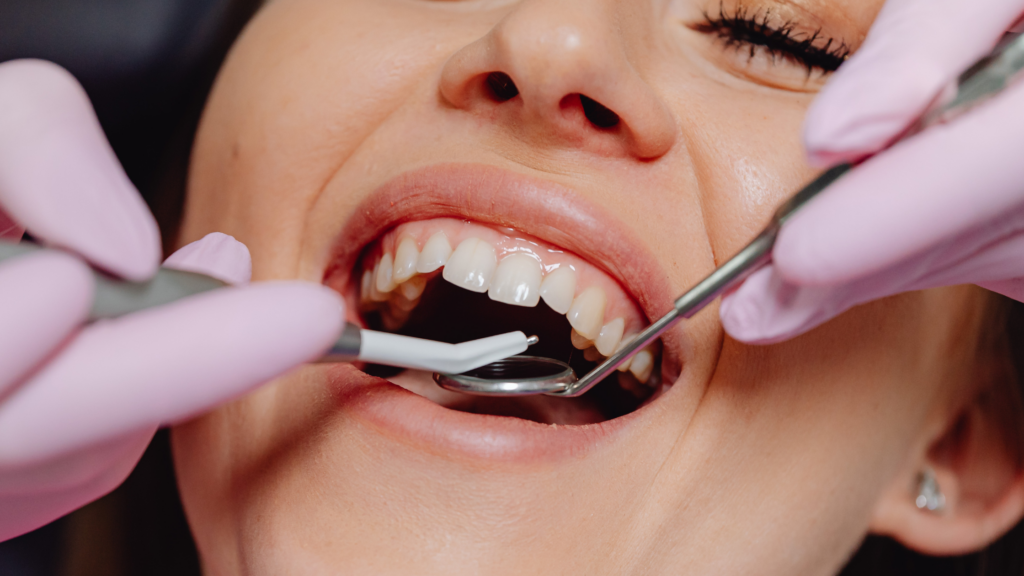
Who Needs More Frequent Dental Cleanings
For a subset of patients, three to four professional cleanings per year is the appropriate standard of care. This isn’t unusual or alarming – it reflects a higher baseline risk that makes more frequent intervention clinically necessary.
You may benefit from more frequent cleanings if any of the following apply to you:
- You have been diagnosed with gingivitis or periodontal disease, even in a currently managed state
- You have diabetes, which impairs the body’s ability to fight bacterial infection and accelerates gum tissue breakdown
- You smoke or use any form of tobacco, which significantly increases tartar accumulation and suppresses soft tissue healing
- You are pregnant, as hormonal changes during pregnancy make gum tissue more reactive and prone to inflammation – a condition called pregnancy gingivitis
- You take medications that cause dry mouth, including many antihistamines, antidepressants, and blood pressure medications, which reduce saliva’s natural protective role
- You have a history of frequent or recurring cavities regardless of your daily home care habits
- You have existing restorations such as crowns, bridges, or dental implants that require regular clinical monitoring
The biology behind the three-to-four-month interval for higher-risk patients is specific and well-supported. The bacteria responsible for periodontal disease re-establish themselves in treated areas within roughly three months. If that cycle goes uninterrupted, the disease progresses – and this is one of the more common reasons patients eventually find themselves needing more involved restorative treatment down the road.
In our experience, patients who shift to a more frequent cleaning schedule tend to show measurable improvement relatively quickly: healthier gum pocket measurements, less bleeding during probing, and a more stable overall baseline. Getting ahead of the problem is considerably more manageable than addressing it after it has progressed.
What Happens When You Skip Cleanings
There is a meaningful difference between adjusting your cleaning frequency and skipping dental visits altogether. The consequences of the latter are well documented and consistently underestimated.
When plaque isn’t professionally removed at regular intervals, it mineralizes into tartar – a calcified deposit that cannot be dislodged with a toothbrush or floss, regardless of technique. Tartar accumulation along the gumline drives chronic inflammation, which is the entry point of periodontal disease. Over time, that inflammation erodes the bone and connective tissue supporting your teeth, and tooth loss becomes a real possibility rather than a theoretical one.
The decay side of the equation carries equal weight. According to the CDC’s 2024 Oral Health Surveillance Report, nearly 21% of U.S. adults between the ages of 20 and 64 have at least one permanent tooth with untreated decay. Many of those cases began as small, easily addressed problems that routine cleanings and exams would have caught earlier – before they reached the stage where a root canal or extraction became the only viable option.
Beyond the teeth themselves, chronic gum inflammation has a documented relationship with systemic health conditions including cardiovascular disease, diabetes, and respiratory illness. The CDC reports that over $45 billion in U.S. productivity is lost annually to untreated dental disease – a figure that reflects how significantly oral health problems affect daily life and overall wellbeing, not just what happens in the mouth.
Most of these outcomes are preventable. Regular professional cleanings are among the highest-return investments you can make in your long-term health.
The Difference Between a Standard Cleaning and a Deep Cleaning
Patients who haven’t been to the dentist in some time often wonder whether they’ll need a “deep cleaning” rather than a routine one. It’s a reasonable concern, and it deserves a direct answer.
A standard prophylaxis – the cleaning most patients receive at their twice-yearly visit – focuses on removing plaque and tartar from above and just at the gumline. For patients with healthy gums and manageable buildup, this is entirely appropriate and is what the vast majority of patients receive.
A deep cleaning, technically called scaling and root planing, is a distinct procedure designed for patients with active periodontal disease. It involves cleaning beneath the gumline to remove bacterial deposits from the root surfaces of teeth, and smoothing those surfaces to discourage re-attachment of harmful bacteria. This isn’t a consequence of missing appointments – it’s the clinically indicated treatment for a specific disease state that not every patient has.
Whether you need a standard cleaning or something more involved is determined by what we find during your exam, not by how long it’s been since your last visit. Some patients who haven’t seen a dentist in several years have surprisingly healthy gums. Others who come in consistently can still develop early signs of disease. What matters is an accurate assessment of where things stand, and that’s exactly what your first visit with us will establish.
If you’ve been away for a while and are uncertain about what you might need, the most useful step you can take is to come in. Our team approaches every new patient without judgment – wherever you’re starting from, we work forward from there.
What to Expect During a Professional Dental Cleaning and Exam
For patients who are new to our practice or haven’t been seen in years, knowing what the appointment actually involves tends to make the whole experience significantly less stressful.
A dental cleaning and exam at Southtown Family Dental includes the following:
Scaling is the core of the cleaning itself. Using specialized instruments, we remove plaque and hardened tartar from the surfaces of your teeth and along and just beneath the gumline – including the areas that daily brushing simply cannot reach.
Polishing follows using a mildly abrasive paste to smooth enamel surfaces and remove surface staining from coffee, tea, or tobacco. Patients consistently report that this is the part of the appointment that leaves their teeth feeling cleanest.
Fluoride treatment is applied when clinically appropriate to reinforce enamel and add a protective barrier against future decay – particularly valuable for patients at elevated cavity risk.
The comprehensive exam is conducted by Dr. Richard Campos and covers far more than a surface check. He evaluates the health of your teeth, gums, bite, and jaw for decay, disease, or structural concerns. Digital X-rays are taken as needed, giving us the ability to detect problems between teeth, changes in bone density, and infections that aren’t visible to the naked eye.
Oral cancer screening is a standard part of every exam at our practice, not an optional add-on. Early detection substantially improves outcomes, and this step adds only a few minutes to your appointment.
Your treatment conversation closes the visit. You leave with a clear understanding of your current oral health, what – if anything – needs attention, and what your options are. Nothing is recommended without a plain explanation of the clinical reasoning behind it.
For most patients, the full appointment is completed within an hour. Patients who come in expecting a difficult experience tell us regularly that it was far more comfortable than they anticipated.
Dental Cleanings at Every Stage of Life
Cleaning frequency isn’t exclusively an adult question. The appropriate schedule shifts across life stages, and what happens during childhood and young adulthood has a disproportionate impact on long-term oral health outcomes.
For children, the American Academy of Pediatric Dentistry recommends a first dental visit by age one – or within six months of the first tooth appearing. This isn’t only about cleaning; early visits allow us to monitor development, identify concerns before they become problems, and help young patients build a positive, low-anxiety relationship with dental care. Our team takes particular care with younger patients and enjoys helping children understand what’s happening at every step.
For adults, the twice-yearly standard applies broadly, with the adjustments noted above for higher-risk patients. Pregnant patients deserve specific mention: gum tissue becomes significantly more reactive to bacterial plaque during pregnancy, even in patients who have maintained healthy gums throughout their adult lives. More frequent monitoring during this period is a clinically sound precaution.
For older adults, the picture becomes more layered. Gum disease prevalence rises sharply with age, and many seniors are managing medications that affect oral health through dry mouth, gum changes, or altered healing response. We see a substantial number of patients in the South Kansas City area who have gone without care for extended periods – often due to cost, access, or uncertainty about what treatment they might need. We accept Medicaid for patients of all ages, and our in-house membership plans are structured specifically for patients who don’t have traditional dental insurance. Plans include two routine exams and cleanings per year, annual X-rays, fluoride treatment, and meaningful discounts on additional care – with no deductibles, no waiting periods, and no claim forms.
Finding the Right Cleaning Schedule for You
The most honest answer to how often you should get a dental cleaning is the one that comes from an exam, not from a general article – including this one.
What we find during your first visit determines everything that follows. If your gums are healthy, your home care is consistent, and your risk profile is low, a twice-yearly schedule is almost certainly appropriate. If we identify early signs of inflammation, areas that warrant closer monitoring, or risk factors that increase your susceptibility to disease, we’ll recommend the interval that genuinely matches your clinical situation – and we’ll explain our reasoning clearly so you understand why.
Dr. Campos founded Southtown Family Dental specifically to bring this kind of individualized, community-rooted care to the Waldo/Brookside neighborhood and the patients who live here. His background in public health – including years serving both rural and urban communities through the National Health Service Corps – shapes how we think about preventive care and access to it. A cleaning schedule should be driven by clinical judgment, not by what a calendar or insurance policy says is standard.
If you’re new to our practice or haven’t been seen in some time, visit our new patients page to learn what to expect at your first appointment. You can also call us at (816) 603-1737, and our team will walk you through scheduling and answer any questions before you come in.
Start with One Appointment
Most dental problems that turn into complex, expensive treatment share a common origin: they were small, addressable concerns at an earlier point. The role of professional cleanings – at whatever frequency is right for you – is to prevent those early-stage issues from progressing to the point where larger intervention becomes necessary.
For most South Kansas City patients, twice a year is the right starting point. For others, the clinically appropriate answer is three or four times per year. The only way to know which category you’re in is to schedule an exam and let the findings guide the recommendation.
If you’ve been putting this off, this is a reasonable time to take the step. Call us at (816) 603-1737, fill out our online contact form, or review our new patient information to get started. We’d be glad to welcome you to our practice.
Frequently Asked Questions
How often should I get a dental cleaning if my teeth feel fine?
Feeling fine is a good sign, but it isn’t a reliable indicator of what’s actually happening below the gumline or between teeth. Many conditions – including early gum disease and cavities – produce no noticeable symptoms until they’ve already progressed. For patients at low clinical risk, twice a year is generally appropriate. An exam will confirm whether that schedule is right for you.
What happens if I haven’t been to the dentist in a few years?
The most important thing is to come in rather than continue waiting. What you need will depend on what we find during your exam – not on how long it’s been. Some patients who’ve been away for years have relatively healthy gums; others need a deeper cleaning or a few specific areas addressed before starting routine maintenance. Our team approaches every new patient without judgment.
Does dental insurance cover more than two cleanings a year?
Most standard dental insurance plans cover two preventive cleanings annually. If Dr. Campos recommends more frequent cleanings based on your oral health – for example, every three to four months for periodontal disease management – additional visits may involve a co-pay or out-of-pocket cost depending on your specific plan. For patients without insurance, our in-house membership plans include two cleanings per year and meaningful discounts on any additional care needed.
Can I skip dental cleanings if I brush and floss consistently?
No. Tartar – hardened, calcified plaque – cannot be removed by brushing or flossing regardless of technique or consistency. Once plaque has mineralized, it requires professional instruments to remove safely. Good home care meaningfully extends the time before problems develop, but it does not replace the need for professional cleanings at appropriate intervals.
How early should my child have their first dental cleaning?
The American Academy of Pediatric Dentistry recommends a first dental visit by age one, or within six months of the first tooth appearing. Starting early allows us to monitor development, identify concerns before they become larger problems, and help children develop a comfortable relationship with dental care from a young age. We welcome patients of all ages at our Kansas City practice.
Is there anything I can do between cleanings to slow plaque buildup?
Yes – consistent daily habits make a real difference. Brushing twice daily with a fluoride toothpaste, flossing or using an interdental cleaner once per day, staying well hydrated, and limiting sugary or acidic foods and beverages are the most impactful steps you can take. These habits don’t replace professional cleanings, but they meaningfully reduce the rate of buildup and make each visit more straightforward.

